
Roof repair financing options are a crucial aspect of homeownership, offering a lifeline when unexpected costs arise. From personal loans to credit cards, the possibilities are vast, and choosing the right plan can make all the difference. Let's delve into the world of roof repair financing options and uncover the key factors to consider.
Introduction to Roof Repair Financing Options
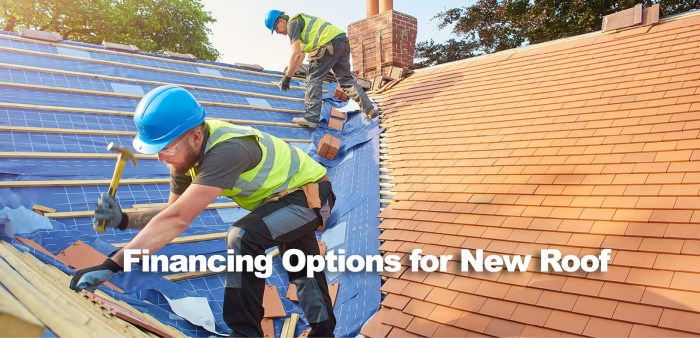
When faced with the need for roof repairs, having financing options can make a significant difference for homeowners. These options can provide the necessary funds to address roofing issues promptly, ensuring the safety and integrity of the home.
Choosing the right financing plan for roof repairs is crucial as it can help homeowners manage the costs effectively. Whether through loans, credit cards, or specialized financing programs, selecting the best option can ease the financial burden and make the repair process more manageable.
The Benefits of Choosing the Right Financing Plan
Having the right financing plan in place can offer several benefits to homeowners:
- Allows for timely repairs to prevent further damage to the property.
- Spreads out the cost of repairs over a period of time, making it more affordable.
- Provides peace of mind knowing that the necessary funds are available for roof maintenance.
- May offer competitive interest rates and flexible repayment terms.
Common Challenges Homeowners Face with Roof Repair Costs
Dealing with roof repair costs can present various challenges for homeowners:
- Unexpected expenses that may not fit within the household budget.
- Difficulty in obtaining financing due to credit history or income limitations.
- The urgency of repairs may lead to hasty decisions or inadequate funding choices.
- Concerns about the long-term affordability of the chosen financing option.
Types of Roof Repair Financing

In order to address the financial aspect of roof repairs, there are various financing options available to homeowners. Each option has its own set of pros and cons, which should be carefully considered before making a decision. Here, we will compare and contrast some of the common types of financing options for roof repairs and provide examples of reputable lenders in the industry.
Personal Loans
Personal loans are a common choice for financing roof repairs as they provide a lump sum of money that can be used towards the cost of the repair. These loans typically have fixed interest rates and repayment terms, making it easier to budget for the expenses.
However, personal loans may require a good credit score to qualify, and interest rates can be higher compared to other financing options.
Home Equity Loans
Home equity loans allow homeowners to borrow against the equity in their home to fund roof repairs. These loans often have lower interest rates than personal loans since they are secured by the value of the home. However, failing to repay a home equity loan can result in foreclosure, putting the homeowner's property at risk.
Credit Cards
Using a credit card to finance roof repairs can be a convenient option for smaller repair costs. Many credit cards offer promotional interest rates or cashback rewards, which can be beneficial for homeowners. However, if the balance is not paid off in full each month, high-interest rates can quickly accumulate, leading to additional financial strain.
Examples of Reputable Lenders
Wells Fargo
Offers personal loans and home equity loans for roof repairs with competitive rates.
LightStream
Provides unsecured personal loans for various home improvement projects, including roof repairs.
Discover
Offers credit cards with cashback rewards that can be used for financing roof repairs.
Eligibility Criteria and Requirements

When it comes to obtaining roof repair financing, there are certain eligibility criteria and requirements that you need to meet. These criteria can vary depending on the lender and the type of financing option you are considering.
Typical Eligibility Criteria
- Proof of ownership: You will typically need to provide proof that you own the property in need of roof repair.
- Credit score: Lenders often look at your credit score to assess your creditworthiness. A higher credit score may increase your chances of approval.
- Income verification: You may be required to provide proof of income to demonstrate your ability to repay the loan.
- Debt-to-income ratio: Lenders may also consider your debt-to-income ratio to ensure you can afford the monthly payments.
Documentation and Information Required
- Government-issued ID: You will likely need to provide a valid government-issued ID for identity verification.
- Proof of income: This can include pay stubs, tax returns, or bank statements to verify your income.
- Property information: You may need to provide details about the property, such as the address and estimated repair costs.
- Loan application: You will need to fill out a loan application form with your personal and financial details.
Impact of Credit Scores and Income Levels
- Credit scores: A higher credit score can make you a more attractive borrower to lenders, potentially leading to better loan terms and lower interest rates.
- Income levels: Your income level can impact the amount you are eligible to borrow and your ability to repay the loan. Higher income levels may increase your chances of approval.
- Debt-to-income ratio: Lenders often look at your debt-to-income ratio to ensure you can comfortably afford the monthly loan payments without being overburdened by debt.
Interest Rates and Payment Terms

When it comes to roof repair financing, understanding the interest rates and payment terms is crucial for making the right financial decision. Let's explore how interest rates are determined and the common payment terms offered by lenders.
Interest Rates for Roof Repair Financing
Interest rates for roof repair financing can vary depending on several factors such as the lender, the borrower's credit score, the loan amount, and the loan term. Typically, interest rates for roof repair loans are fixed, meaning that they remain the same throughout the loan term.
However, some lenders may offer variable-rate loans where the interest rate can change over time based on market conditions.
Payment Terms for Roof Repair Financing
The common payment terms offered by lenders for roof repair financing include fixed-rate loans and variable-rate loans. Fixed-rate loans have a stable interest rate and monthly payment amount, providing predictability and consistency for borrowers. On the other hand, variable-rate loans may start with lower initial rates but can fluctuate over time, potentially leading to higher payments in the future.
Strategies for Finding the Best Rates and Terms
To find the best interest rates and payment terms for roof repair financing, borrowers should compare offers from multiple lenders, consider their creditworthiness, and choose a loan term that aligns with their financial goals. Additionally, improving credit scores, paying off existing debts, and providing collateral can help borrowers secure lower interest rates and favorable payment terms.
Tips for Choosing the Right Financing Option
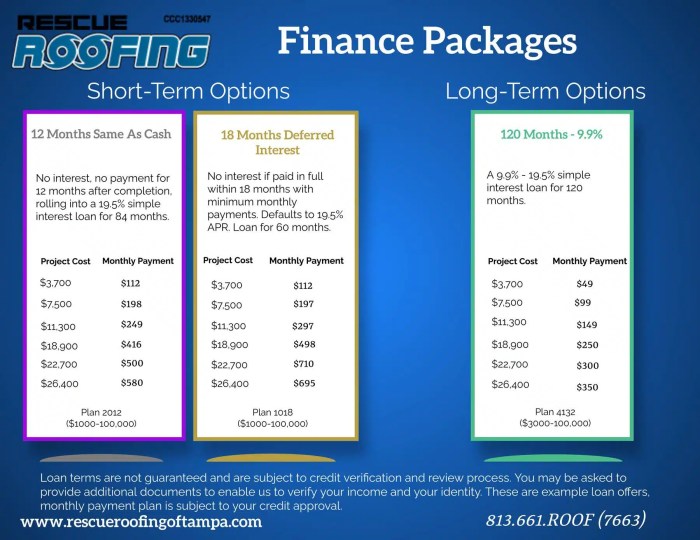
When it comes to choosing the right financing option for roof repairs, there are several factors to consider. Evaluating the terms and conditions of different financing options is crucial to ensure you select the one that best fits your needs and budget.
Here are some tips to help you make an informed decision:
Checklist of Factors to Consider
- Interest Rates: Compare the interest rates offered by different financing options to determine the most cost-effective solution.
- Payment Terms: Look into the payment terms, including the duration of the loan and the frequency of payments, to ensure they align with your financial capabilities.
- Fees and Charges: Consider any additional fees or charges associated with the financing option, such as processing fees or prepayment penalties.
- Repayment Flexibility: Check if the financing option offers any flexibility in repayment, such as the ability to make extra payments or adjust the payment schedule.
- Credit Score Requirements: Understand the credit score requirements for each financing option and ensure you meet the eligibility criteria.
Expert Advice on Evaluating Terms and Conditions
It is essential to carefully read and understand the terms and conditions of each financing option to avoid any surprises or hidden costs down the line.
Importance of Budgeting and Planning for Repayment
Before choosing a financing option, make sure to create a budget that includes the monthly payments for the loan. Planning for repayment will help you avoid financial strain and ensure you can comfortably meet your obligations.
Last Point
In conclusion, navigating the realm of roof repair financing options involves weighing various factors to make an informed decision. By understanding the types of financing available, eligibility criteria, interest rates, and payment terms, homeowners can secure the right plan for their needs.
Remember, a well-thought-out financing choice can lead to a smoother roof repair process and peace of mind.
Key Questions Answered
What are the typical eligibility criteria for roof repair financing?
Eligibility criteria often include a minimum credit score, proof of income, and sometimes a certain level of home equity.
How are interest rates determined for roof repair financing?
Interest rates can be influenced by factors such as credit score, loan amount, and the type of financing chosen.
What are some common challenges homeowners face when dealing with roof repair costs?
Homeowners often struggle with unexpected repair expenses, difficulty in securing financing, and the pressure of making timely decisions.