
Delving into the world of roof replacement tax credit, we uncover how this financial incentive plays a crucial role in encouraging homeowners to upgrade their roofs. From potential savings to environmental impacts, the implications of this tax credit are far-reaching and significant.
As we navigate through the details of eligibility criteria, claiming processes, and energy efficiency impacts, a comprehensive understanding of roof replacement tax credit emerges, shedding light on its importance in the roofing industry.
Importance of Roof Replacement Tax Credit
Roof replacement tax credits play a crucial role in encouraging homeowners to invest in the maintenance and improvement of their roofs. These incentives not only benefit individual homeowners but also have a positive impact on the roofing industry as a whole.
Increased Investment in Roof Replacements
Tax credits for roof replacements provide financial relief to homeowners, making it more affordable for them to undertake necessary repairs or upgrades. This, in turn, leads to an increase in the overall investment in roof replacement projects across the country.
Incentivizing Energy-Efficient Roofing Solutions
Some tax credits are specifically designed to promote the use of energy-efficient roofing materials and technologies. By offering incentives for the installation of these sustainable solutions, homeowners are encouraged to make environmentally friendly choices when replacing their roofs.
Boosting Demand for Professional Roofing Services
The availability of tax credits for roof replacements has led to a surge in demand for professional roofing services. This increased demand not only benefits roofing contractors but also contributes to job creation and economic growth within the industry.
Eligibility Criteria for Roof Replacement Tax Credit

When it comes to qualifying for the roof replacement tax credit, homeowners need to meet specific requirements set by the government. These criteria help ensure that the tax credit is utilized appropriately and benefits those who truly need it.
Requirements for Eligibility
- Homeowners must own and reside in the property for which the roof replacement is being done.
- The roof replacement must be for the homeowner's primary residence, not for a rental property or second home.
- The roof replacement must meet certain energy-efficient standards set by the government to qualify for the tax credit.
- Only certain types of roofing materials and systems may be eligible for the tax credit, so it's important to check with the IRS or a tax professional for guidance.
Limitations and Restrictions
While the roof replacement tax credit can provide financial relief for homeowners, there are limitations and restrictions to be aware of:
- The tax credit may have a maximum cap or limit on the amount that can be claimed, so homeowners should verify this information before proceeding.
- Not all roof replacements will qualify for the tax credit, especially if they do not meet the required energy-efficient standards.
- Homeowners may need to provide documentation or proof of the roof replacement and its energy-efficient features to claim the tax credit successfully.
Ineligible Scenarios
- If the roof replacement is for a property that is not the homeowner's primary residence, it may not be eligible for the tax credit.
- If the roofing materials or systems used do not meet the energy-efficient standards specified by the government, the tax credit may not apply.
- If the homeowner has already claimed the tax credit for a previous roof replacement within a certain timeframe, they may not be eligible to claim it again.
Process of Claiming Roof Replacement Tax Credit

To claim the tax credit for roof replacement, homeowners need to follow specific steps and provide necessary documentation to support their claim. Maximizing the tax credit benefits during the roof replacement process is crucial for reducing overall costs and taking advantage of available incentives.
Steps to Follow for Claiming Tax Credit
- Evaluate eligibility: Ensure that your roof replacement meets the criteria set forth by the government for claiming the tax credit.
- Keep records: Maintain detailed records of all expenses related to the roof replacement, including materials, labor costs, and any additional fees.
- File tax return: Include the relevant information and documents when filing your tax return to claim the tax credit for roof replacement.
Documentation Required for Claiming Tax Credit
- Receipts and invoices: Provide copies of receipts and invoices from the roofing contractor detailing the expenses incurred during the replacement process.
- Certification of eligibility: Obtain a certification from the contractor or manufacturer confirming that the roof replacement meets the necessary criteria for the tax credit.
- Proof of payment: Submit proof of payment for the roof replacement, such as canceled checks or credit card statements, to validate the expenses claimed.
Tips for Maximizing Tax Credit Benefits
- Plan ahead: Research and compare different roofing materials and contractors to find cost-effective options that still qualify for the tax credit.
- Combine incentives: Explore other available incentives or rebates that can be used in conjunction with the tax credit to further reduce the overall cost of the roof replacement.
- Consult a tax professional: Seek advice from a tax professional to ensure that you are maximizing your tax credit benefits and taking advantage of all available deductions.
Impact of Roof Replacement Tax Credit on Energy Efficiency
Tax credits for roof replacement play a crucial role in promoting energy-efficient roofing solutions. By providing financial incentives to homeowners who choose energy-efficient materials, these credits encourage the adoption of sustainable practices that can significantly reduce energy consumption and promote environmental conservation.
Environmental Benefits of Incentivizing Energy-Efficient Roofing Materials
- Energy savings: Energy-efficient roofing materials help reduce the need for heating and cooling, leading to lower energy bills and decreased reliance on fossil fuels.
- Reduced carbon footprint: By choosing energy-efficient roofs, homeowners can lower their carbon emissions, contributing to a healthier environment and combating climate change.
- Extended roof lifespan: Energy-efficient materials often have longer lifespans, reducing the need for frequent roof replacements and minimizing waste generation.
Examples of Tax Credits Encouraging Sustainable Roofing Practices
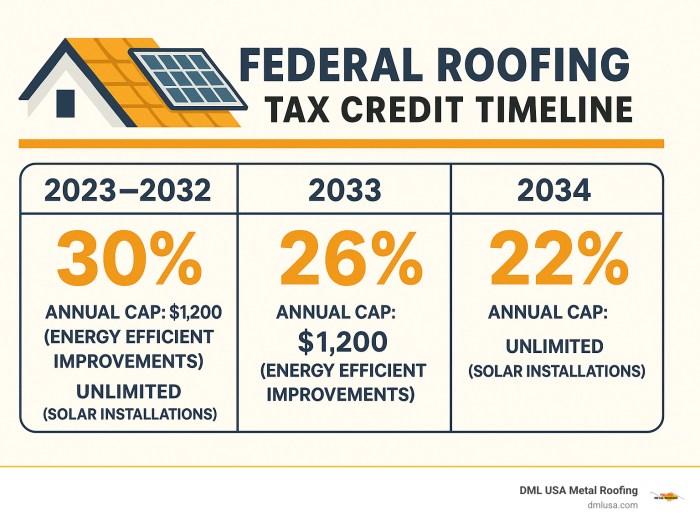
- In the United States, the Federal Residential Energy Efficient Property Credit offers tax credits to homeowners who install energy-efficient roofing materials, such as solar panels or reflective roofs.
- Incentive programs in various states provide financial incentives for homeowners to choose energy-efficient roofs, leading to a significant increase in the adoption of sustainable roofing solutions.
- Green building certifications, such as LEED (Leadership in Energy and Environmental Design), often require the use of energy-efficient roofing materials, driving the demand for sustainable roofing practices.
Final Summary

In conclusion, roof replacement tax credit stands as a valuable tool not just for homeowners looking to enhance their property, but also for promoting sustainability and energy efficiency in the construction sector. By exploring the nuances of this tax credit, individuals can make informed decisions that benefit both their finances and the environment.
Essential FAQs
Who is eligible for roof replacement tax credit?
Homeowners who meet specific requirements such as using approved roofing materials and meeting energy efficiency standards are typically eligible.
What documentation is needed to claim the tax credit?
Homeowners usually need to provide receipts, invoices, and proof of installation from licensed contractors to support their claim.
Can the tax credit be claimed for roof repairs or only full replacements?
Generally, the tax credit is applicable to full roof replacements that meet the necessary criteria for eligibility.